Wednesday, 19 March 2025

What’s The Role Of A Neurologist In Stroke Recovery With MS?

Recovering from a stroke is hard enough, but when you throw multiple sclerosis (MS) into the equation, it becomes even more complex. That's where a neurologist comes in.

a)     Evaluating the damage and developing a plan


When a patient Recovering From A Stroke, a neurologist is instrumental in gauging how much damage is done and how it may collaborate with MS symptoms. Both involve the nervous system, so what's behind issues; stroke-caused damage or MS worsening needs to be evaluated. From that evaluation, other healthcare providers along with the neurologist form a customized plan for recovery.


b)    Managing medications


One of the largest responsibilities a neurologist has is medication adjustments. MS drugs such as DMTs must be monitored carefully following a stroke so they won't conflict with stroke recovery drugs, such as blood thinners or blood pressure medications. A neurologist makes sure that all drugs for MS Treatment work harmoniously safely and effectively.


c)     Rehabilitation and therapy support


A neurologist with the help of recoveriX brain-computer interface technology coordinates rehabilitation efforts, which may include physical therapy, occupational therapy, and speech therapy. Since MS can already cause mobility challenges, the neurologist works closely with rehab specialists to find exercises that won’t trigger MS flare-ups but still promote stroke recovery.


Final thoughts


A neurologist is an important member of the recovery team for a person with MS after a stroke. They sort through the intricacies of both conditions to ensure that treatment protocols, medications, and therapies are all in concert. Recovery may take time, but having an informed neurologist on your side can ease the process and make it more efficient.


For more information, you can visit our website https://recoverix.com/ or call us at +43 7251 22240


Wednesday, 5 March 2025

Can BCI Be Combined With Other Rehab Techniques Like Robotics Or VR?

Although BCI by itself is a stroke recovery breakthrough, when it is paired with robotics and VR, rehabilitation is elevated to a higher level. Not only do these cutting-edge methods speed up recovery but also fun the process of therapy in a big way. As technology improves by leaps and bounds, stroke rehab's future seems brighter than ever!


How BCI and robotics work together


BCI is strong by itself, but combined with robot-assisted Physical Therapy After Stroke, outcomes can be even improved. Robot-assisted stroke rehabilitation typically includes exoskeletons or robot arms that guide movement. This is how they complement each other:


1)     Mind-Controlled Movement: BCI perceives the intention to move in the patient and sends signals to a robotic limb.

2)     Assisted Repetitions: If the patient cannot get the movement done, the robot device takes over to assist.

3)     Muscle Activation Support: The pairing motivates the brain to rewire, enhancing motor control over the course of time.


How VR enhances BCI rehab


Virtual reality (VR) has already revolutionized physical therapy, and with the addition of recoveriX BCI, it provides a virtual neuro-rehabilitation experience.


a)     Engaging Therapy: Patients can rehearse movements in a virtual setting, so rehab is more of a game than a medical process.

b)    Instant Feedback: BCI monitors brain activity and VR reacts immediately, reinforcing proper movements.

c)     Stronger Brain-Body Connection: When patients observe their virtual avatar reacting to their thoughts, it reinforces the neural pathways required for actual movement.


For instance, a patient with MS Symptoms who is using BCI and VR may watch their virtual hand move before their real hand does, assisting the brain in "relearning" motor control more quickly.


For more information, you can visit our website https://recoverix.com/ or call us at +43 7251 22240
Tuesday, 18 February 2025

What Kind Of Exercises Do Patients Do During BCI Therapy?

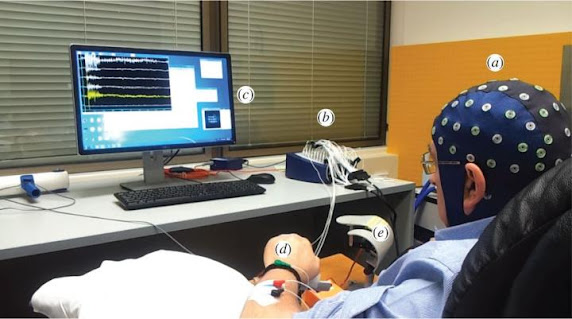
BCI therapy is not simply sitting in a chair with electrodes on your head; it's an active, interactive process that involves mental effort, technology, and sometimes even gaming or robotics. But how does a session of BCI therapy unfold? Let us dissect it and see the various types of exercises that patients do during BCI rehabilitation.

 Mental imagery exercises

Mental imagery is one of the fundamental components of Bci-Based Neurorehabilitation. Patients are instructed to visualize moving their limbs without actually moving them. The BCI system picks up on the brain signals associated with imagined movements and converts them into feedback in real time. For instance, a patient with a stroke can imagine holding something, and the BCI system would decode and reinforce those signals.

2.     Motor training with virtual reality

Virtual Reality (VR) is commonly used in conjunction with recoveriX BCI therapy to render rehabilitation more interactive. Patients can view a virtual arm or leg on a monitor and move it using their brain signals.

3.     EEG-based feedback games

Gamification is another large aspect of BCI rehabilitation. Patients tend to play EEG-based games in which they move objects on a screen with their minds. Aside from physical rehabilitation, other BCI therapies target cognitive processes such as memory and attention.

4.     Mirror therapy with BCI integration

Mirror therapy is also employed in Stroke Rehabiliation in combination with BCI. A patient may put their healthy limb in front of a mirror while the BCI system records their brain activity. The brain is tricked into thinking that both limbs are moving, which can speed up recovery by activating the affected side.


For more information, you can visit our website https://recoverix.com/ or call us at +43 7251 22240


Wednesday, 5 February 2025

Can BCI Help Restore Speech After A Stroke?

Life-altering effects of strokes can surface, and losing the voice is undoubtedly one of the worst fates a patient can face. May BCIs represent the solution to the problem for stroke patients when it comes to recovering their voices?

What is BCI?


BCIs can indeed be a method of direct communication between the human brain and an external device. By translating the electrical signals from the brain to commands, BCI in Stroke Rehabilitation enables people to control computers or even robotic limbs and communication systems strictly through thoughts.


How does BCI restore speech?


In aphasia, a state in which the stroke survivor is unable to speak; Multiple Sclerosis Treatment would provide communication once again. Using neural activity from speech areas of the brain, a BCI system decodes what an individual wants to express and may generate text or even synthesized speech to convey his words.


Step:


·         Read Brain Signals: Activity related to the production of speech by electrodes positioned in or above the brain is sensed.

·         Decoding Thoughts: AI-powered algorithms decode the signals and associate them with the words or phonemes.

·         Speech Generation: A computer or voice synthesizer creates the intended words in real-time.


Recent advances


Recent studies by recoveriX have shown that BCI has the potential to restore speech. In 2021, researchers were able to enable a paralyzed man to communicate by converting his brain signals into text at a rate of 15 words per minute. Recently, a team at UCSF developed a system that allows a stroke survivor to "speak" through an avatar, simply by thinking about words.


For more information, you can visit our website https://recoverix.com/ or call us at +43 7251 22240

Sunday, 19 January 2025

How Does BCI Treatment Reconnect The Brain To The Body?

For stroke survivors or those with neurological injuries, control over their bodies can be an impossible dream. BCI treatment is changing that game by building a bridge between the brain and the body.


This is a technology that reads the signals in your brain and translates them into actions. For people who have lost motor functions and Recovering From A Stroke, BCI can bypass damaged pathways and directly connect the brain to the body.


This connection lets the brain "talk" to muscles or assistive devices in a manner that helps restore movement even when usual communication channels are disrupted.


Detecting brain signals


The first step for BCI treatment at recoveriX is detecting activity in the brain. Sensors are placed either on the scalp or implanted into the brain where they capture the electrical signals formed by the firings of the neurons. These signals relate to thoughts or intentions, for example, lifting a hand or leg.


A person might envision picking up a cup. For that thought, the BCI system detects activity in the brain. Once the brain signals are captured, the BCI system processes and interprets them.


·         Activate robotic devices or prosthetics to perform the desired action.

·         Stimulate muscles directly through electrical impulses, encouraging movement.


Encouraging neuroplasticity


One of the most exciting applications of BCI Treatment For Motor Rehabilitation is its potential in neuroplasticity; the brain's ability to rewire itself. Repeated practice using BCI allows stroke survivors to retrain their brains to find new pathways to communicate with their bodies. This improves movement but also enhances coordination and strength.


For more information, you can visit our website https://recoverix.com/ or call us at +43 7251 22240

Monday, 30 December 2024

Get the best multiple sclerosis treatment with recoveriX

If we talk about Multiple Sclerosis, it is a chronic and autoimmune neurological disorder that affects the CNS (central nervous system), including, the spinal cord, brain, and optic nerves. Some most common types of MS are secondary progressive MS, relapsing-remitting MS, clinically isolated syndrome, and primary progressive MS. If you are seeking the best Multiple Sclerosis Treatment, then you should try recoveriX. It is a brain-computer interface technology that helps rewire the brain itself to relearn lost motor functions. This interface has been introduced by g.tech medical engineering. Our company is one of the leading companies that offer an array of products such as wearable EEG headsets, biosignal amplifiers, neurotechnologies, and brain-computer interfaces. 

RecoveriX is specially designed for Physical Therapy After Stroke. We offer an array of products and research activities that are widely described in peer-reviewed research publications. The main highlights of our product are foot therapy mode, hand therapy mode, mirror neuron system activation with a virtual avatar, easy, online EEG quality control, and more. The best part is that it offers easy-to-understand instructions for the patient. What’s more, there is fully guided therapy which runs for 45 minutes.


When it comes to improvement, you will find it long-lasting and permanent. The system offers three standard training into one treatment – motor imagery, functional electrical stimulation, and mirror neuron therapy. So, what are you waiting for? Try recoveriX today and enjoy incredible benefits!


For more information, you can visit our website https://recoverix.com/ or call us at +43 7251 22240

Monday, 16 December 2024

Brain-Computer Interface To Help Treat Multiple-Sclerosis Condition

Many individuals suffer from severe conditions including multiple sclerosis. This condition can also develop as a side effect after other severe health conditions like stroke.

You have to check with the best Multiple Sclerosis Treatment if your health condition gets severe. BCI techniques can help improve quality of life.


Cognitive training

If you are suffering from multiple sclerosis, then you need proper cognitive training. This training will help in improving brain activity functions.


  • Experts use BCI devices to map brain cell activities
  • You can check the recoveriX portal for more information related to BCI devices and usage
  • The technique helps in regulating muscle spasticity and improves functions

Pain management

When you suffer from spasticity, then you find body joints and muscles may get very stiff. If this condition gets severe then it can be very painful.

Some people suffer from chronic pain condition for a lifetime. The condition needs the best treatment that can help in improving body muscle function.

Assistive technology

Many individuals suffer from advanced multiple sclerosis condition. These individuals may need additional interaction techniques. This is where BCI proves effective.

If you check with Bci-Based Stroke Rehabilitation therapy then you discover that BCI technology helps with assistive interaction. Individuals improve mobility and speech issues when using BCI technology as a part of the treatment.

You have to keep in mind that with BCI technology the initial results are very much promising. When you implement this technique you need to ensure that you conduct well-designed trails. The technique is also very safe to use for many medical conditions. The interventions may vary depending on personal motivation and specific symptoms of the conditions.

For more information, you can visit our website https://recoverix.com/ or call us at +43 7251 22240

Rewiring Hope: Breakthroughs in Neurotherapy at Recoverix

Living with a neurological condition like multiple sclerosis or recovering from a stroke can feel like a lot—but hey, you’re not alone. At R...